
Researched and drafted with AI assistance. Reviewed and fact-checked by the Grounded Pick editorial team before publishing.
We may earn a commission when you purchase through links on this page. This does not affect our editorial rankings — scores are finalized before any affiliate link is placed. Full disclosure →
The Bottom Line (Read This First)
The best fitness subscription is the one you use more than 10 times per month. That sounds obvious — but most people choose a platform based on advertising, then cancel it within 60 days. This guide exists to stop that cycle.
What you will find below: a breakdown of the five fitness subscription categories, what industry retention data says actually drives long-term use, a cost-per-session framework, and a decision tree at the end that maps your specific situation to the right service type. No ranked list — because "best overall" is the wrong question for this category.
Who should keep reading: Anyone comparing Freeletics, Apple Fitness+, MyFitnessPal, Strava, Peloton, FitOn, or a gym membership alternative for 2026 — and anyone who has subscribed to a fitness app and stopped using it within the first month.
TL;DR — Key Takeaways
- 3.6 billion health app downloads in 2024 — yet most users quit within the first month. Access is not the problem; fit is.
- Five distinct subscription categories exist: general platforms, specialized training apps, nutrition apps, recovery/wellness apps, and hybrid AI coaching.
- Annual plans drive 8–60% better first-renewal retention than monthly plans, per Adapty's 2026 benchmarks — but only when you have already verified the app fits your habits during a trial.
- Hardware-bundled subscriptions (Peloton, Apple Fitness+) lose significant value without the specific device. Start with software-only if you are still building consistent habits.
- AI coaching ranges from genuinely adaptive programming (Freeletics) to superficial onboarding questionnaires dressed as "personalization." Use the trial period to tell the difference.
Why Picking the Wrong Fitness Subscription Is So Easy
Here is a number worth sitting with before you open another app store listing: health and wellness app downloads reached 3.6 billion worldwide in 2024, a 6% increase year-over-year — yet most people who download a fitness app stop using it within the first month.
The problem in 2026 is not access to fitness tools. It is knowing which one will actually fit your life, specifically.
The market has fragmented into five distinct service categories, as documented by Straight.com Advisor's fitness app analysis: general fitness platforms, specialized training apps, nutrition-focused apps, recovery and wellness apps, and hybrid AI coaching platforms. Each competes for the same monthly subscription budget. Each looks credible in its app store screenshots. And most people, when overwhelmed, either pick the most-advertised name or subscribe to several simultaneously and use none consistently.
Here is the catch: a 2015-era app with a polished interface can look identical to a 2026 AI-coaching platform on a feature comparison page. That is why a ranked "best of" list fails most readers — it answers the wrong question. The right question is: which type of service matches how you actually behave, not how you plan to behave?
Understanding the evolution of the market helps here. According to Straight.com Advisor, fitness app development has moved through four distinct eras:
| Era | Primary Characteristic | Core Value Delivered |
|---|---|---|
| 2010–2015 | Basic tracking, manual data entry | Logging |
| 2015–2020 | Video libraries, social features | Content access |
| 2020–2024 | Live classes, connected hardware | Real-time engagement |
| 2024–2026 | AI coaching, holistic wellness | Personalized adaptation |
Services built in each era still exist and compete today. Knowing which era a platform was designed in tells you a great deal about its actual capabilities — regardless of how its current marketing describes it.
Before You Subscribe: Six Questions That Change Everything
Most subscription abandonment happens because people skip this step. Before comparing any specific apps, answer these honestly:
1. What is your actual goal — not your aspirational one? Weight loss, muscle building, endurance, flexibility, mental wellness, and general daily activity point to genuinely different service categories. A running app is the wrong tool for someone whose primary need is sleep quality and stress management.
2. What does your track record tell you? According to Forbes Health research cited in fitness behavior analyses — only 8% of people maintain their fitness goals past the initial commitment. That statistic is not meant to discourage you; it is meant to trigger honest self-assessment. If you have canceled three gym memberships in four years, a $30/month premium app is unlikely to change the underlying pattern unless the type of service changes.
3. Where do you actually work out? Home-only, gym-only, outdoor, or mixed environments determine which service categories are even relevant. A live-class platform is wasted on someone who travels consistently and needs offline-capable workouts.
4. What equipment do you have access to? Bodyweight-only users, home gym owners, and people with connected hardware like an Apple Watch or Peloton bike have genuinely different needs. Many premium features on hardware-bundled platforms are simply inaccessible without the specific device. If you are building out a home training space, our guide to the best home gym equipment in 2026 — from budget to premium setups covers what is worth buying before you commit to a subscription.
5. How much time can you realistically commit per session? Short daily windows and longer weekly blocks favor different program structures. A platform built around 45-minute live classes does not serve someone with 20-minute weekday mornings.
6. What actually keeps you accountable? Community leaderboards and social challenges motivate some people and create anxiety for others. AI coaching provides adaptive programming that human trainers cannot replicate at scale — but human coaches provide real-time observational feedback that AI still cannot replicate at all. Knowing your accountability style before subscribing prevents paying for features you will actively avoid.
The Five Fitness Subscription Categories — What Each Actually Delivers
1. General Fitness Platforms

Best for: People with no single dominant goal who want variety across strength, cardio, flexibility, and mindfulness.
What they deliver: All-in-one access to multiple training modalities under a single subscription. FitOn, highlighted by Forbes Health's fitness app coverage as a strong live-class option, is a representative example.
The honest limitation: Breadth tends to come at the cost of depth. If you have a specific training objective — building a 200-lb deadlift, running a sub-2-hour half marathon — a general platform will likely lack the programming specificity you need. These apps work best for people in maintenance mode or those exploring multiple modalities before committing to a specialty.
2. Specialized Training Apps
Best for: People with a defined training discipline who want structured, progressive programming in that niche.
What they deliver: Significantly deeper programming within a single category than any general platform can offer. Strava dominates the running and cycling space with GPS-based real-time tracking and a substantial social layer. Gymshark Training, noted by Forbes Health as a strong option for solo strength training, offers structured progressive overload programming for lifters.
The honest limitation: Your goals will shift. If you want to add cross-training or change disciplines, you will need a second subscription — or a switch. Specialized apps are the right choice when you have a clear, stable training focus.
If strength training is your primary goal, adding a quality resistance band set to your setup can meaningfully expand what a specialized app can program for you without requiring additional equipment investment.
3. Nutrition-Focused Apps
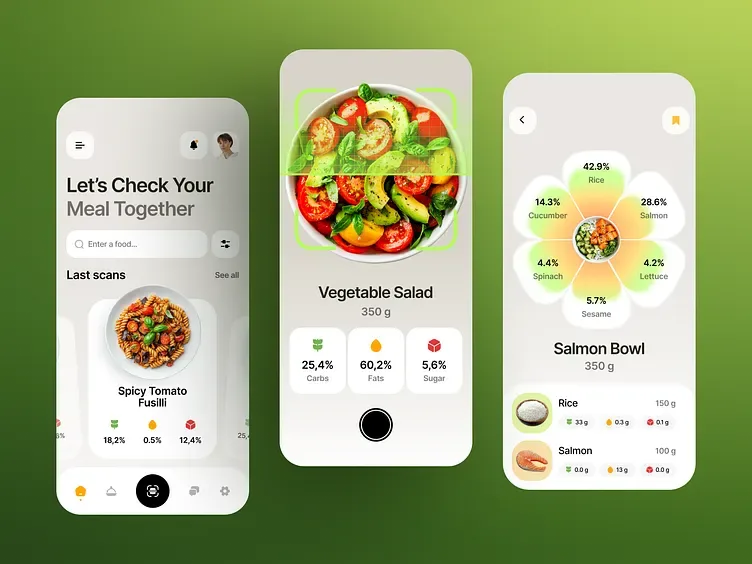
Best for: People whose primary challenge is dietary consistency, not exercise programming.
What they deliver: MyFitnessPal remains the most widely used example in this category, with barcode scanning that makes calorie and macro logging genuinely frictionless. These apps work best when integrated with a fitness tracker or wearable, though many operate effectively as standalone tools. Premium tiers typically unlock detailed macro analysis, meal planning, and third-party fitness platform integration.
The honest limitation: No nutrition app replaces the guidance of a registered dietitian for people with complex dietary needs or medical considerations. For general health goals, however, consistent logging in a free-tier nutrition app often delivers more measurable results than a premium workout subscription with inconsistent use.
For people also evaluating supplement support alongside their nutrition tracking, our guide to vitamins and supplements that actually work in 2026 separates evidence-backed options from marketing noise — and our review of the best protein powders for 2026 covers what fitness experts actually recommend by goal.
4. Recovery and Wellness Apps
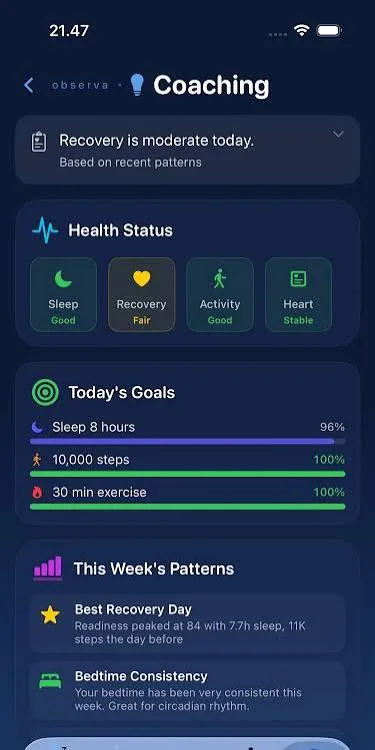
Best for: People who train consistently but underinvest in recovery, or those primarily seeking stress management, sleep improvement, and mobility work.
What they deliver: Sleep tracking, guided meditation, mobility programming, and stress management tools. As Statista's health app data indicates, AI chatbots are increasingly integrated into mental wellness apps — expanding availability while reducing cost compared to human-led alternatives.
The honest limitation: This category is commonly treated as optional, but recovery quality directly affects training performance. Skipping it is a widespread and measurable oversight. Many users in this category would benefit equally from a free app combined with consistent sleep hygiene practices as from a premium recovery subscription.
Yoga-focused subscriptions overlap significantly with this category. If yoga or Pilates-based recovery is your entry point, our comparison of the best yoga mats and Pilates equipment for 2026 covers the gear that pairs with these apps — including our detailed breakdown of grip, thickness, and eco-materials across leading yoga mat options.
5. Hybrid AI Coaching Platforms
Best for: People who want personalized programming but cannot afford or access a human personal trainer.
What they deliver: AI-generated training plans that adapt based on your actual performance data — adjusting load, intensity, and exercise selection over time. Freeletics, featured by Forbes Health, uses an AI generator coach to build customized plans and offers 300+ workout videos covering bodyweight, HIIT, and dumbbell sessions under its paid subscription.
The honest limitation: AI coaching still cannot replicate real-time observational feedback from a skilled human trainer. The gap narrows as the technology improves, but it has not closed. The value proposition is personalization at a price point well below traditional personal training — not a full replacement for it.
This is the fastest-growing category in 2026, and it is also where marketing claims most often outpace actual capability. More on how to evaluate those claims below.
What Keeps Subscriptions Active vs. What Gets Them Canceled
Retention data from the app industry reveals structural patterns that predict whether a fitness subscription delivers lasting value. These patterns are worth understanding before you commit — not after you have already paid for a quarter upfront.
Onboarding quality predicts early retention. Services that personalize the experience during initial setup — asking about your goals, fitness level, available equipment, and schedule — create stronger initial commitment. If an app skips onboarding entirely and drops you into a generic content library, that is a meaningful warning sign about how the rest of the product was built.
Trial period structure matters more than trial length alone. According to Adapty's 2026 SOIS fitness app benchmark data, offering a free trial improves first-renewal retention by 8–60% depending on plan type — and trial structure experiments show a 59.6% lifetime value win rate. For consumers, the implication is clear: services with well-designed trials are more likely to be products worth continuing. A 3-day trial is barely enough to complete a single workout cycle. A 14-day trial gives you enough data to assess whether the programming structure fits your actual schedule.
Annual subscriptions consistently outperform monthly plans on retention and engagement. Users who commit annually engage more consistently — partly from psychological investment, partly because lower per-month cost reduces friction. If you have verified during a trial that a service fits your habits, the annual plan is usually the better financial and behavioral decision. If you have not verified fit yet, it is not.
Progress visibility sustains long-term use across all categories. Apps like Strava and MyFitnessPal built their user bases on frictionless data capture — GPS tracking and barcode scanning respectively — that makes progress visible without significant manual effort. Services that require heavy manual logging tend to see engagement drop sharply after the first few weeks.
Content freshness matters more than raw library size. A platform with 5,000 static workouts that never adds new content will feel stale within months. Regular additions — new classes, updated programming, seasonal challenges — signal active maintenance and give returning users a reason to keep opening the app.
Hardware-Bundled vs. Software-Only: Which Model Fits Your Situation?
This is one of the most consequential decisions in the fitness subscription space, and it is frequently made in the wrong order — people buy hardware first and discover the subscription terms afterward, rather than evaluating the full ecosystem cost upfront.
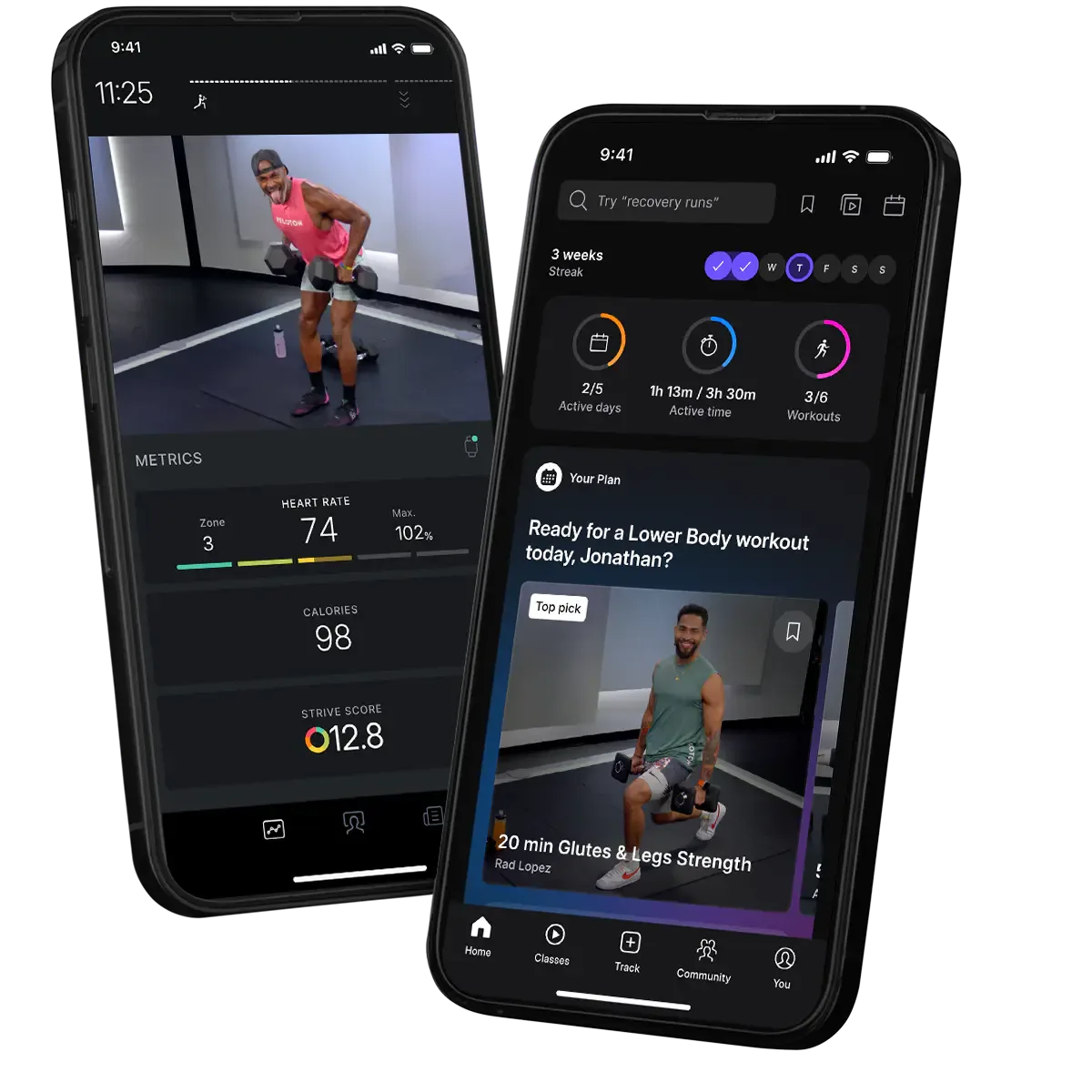
Hardware-bundled platforms like Peloton, Apple Fitness+, and Oura offer deeper integration between tracking data and programming. Apple Fitness+ is tightly coupled with Apple Watch — heart rate, calorie, and workout metrics flow directly into the app during sessions. But that integration is only available to Apple Watch owners. Without the hardware, Apple Fitness+ loses most of its differentiation versus a mid-tier software-only app.
Peloton's model is even more hardware-dependent. The platform was built around its bike and treadmill. As Business of Apps' health and fitness benchmark data notes, Peloton has faced challenges from slower hardware sales — a reminder that hardware-first ecosystems carry platform risk if the company's hardware business weakens.
Software-only subscriptions have a lower barrier to entry and greater flexibility. They work across multiple devices, are not tied to a single ecosystem, and can be canceled or switched without losing a hardware investment. For users who are still building consistent exercise habits, starting with a software-only subscription is almost always the more sensible approach.
The hybrid gym + digital model is growing as a third option. According to Custom Market Insights' US health and fitness club market report, these models pair in-person gym access with a digital class library — offering flexibility without sacrificing the accountability structure of a physical location. Major chains including Life Time and 24 Hour Fitness have developed digital components alongside their physical presence, as noted by IBISWorld's 2026 US Gym & Fitness Clubs industry analysis.
AI Coaching in 2026: What "Personalized" Actually Means
"AI-powered" has become a marketing phrase applied to features of wildly varying sophistication. Understanding the distinction before you pay for it matters.
Genuine AI personalization adjusts your programming based on actual performance data — increasing load when you are progressing, reducing intensity when recovery metrics suggest fatigue, and modifying exercise selection based on equipment availability or injury flags. Freeletics is a well-documented example: its AI coach generates customized training plans and adapts them over time based on user feedback and performance inputs.
Superficial AI personalization means the app asks a few onboarding questions and assigns you to a pre-built program template. The experience feels personalized. The underlying programming is static.
This distinction is nearly impossible to identify from a feature list. The only reliable way to evaluate it is during the trial period: deliberately vary your performance inputs and observe whether the programming actually responds. If the app gives you the same workout regardless of how you reported your last session, the "AI" is mostly marketing.
AI integration in recovery and mental wellness apps is following a different trajectory. As Statista's health app research indicates, AI chatbots in meditation apps address availability and cost barriers that matter for mental health support — and the technology is more mature in the wellness space than in pure exercise programming.
How to Calculate Whether a Subscription Is Worth It: A Framework
Price is a poor proxy for value in this market. A $15/month service used 5 days per week costs $0.75 per session. A $45/month service used twice costs $22.50 per session. The math favors the more expensive option — but only if the usage assumption is realistic.
Use this framework before committing:
- Calculate realistic cost-per-use. Divide the monthly price by how many times you genuinely expect to use the service each month — not how many times you hope to. Most people use a fitness app 8–12 times per month, not the 20–30 that optimistic projections suggest.
- Compare against what it replaces. A $20/month fitness app that eliminates a $60/month gym membership you were barely using is a net financial gain. A $20/month app that duplicates features already available in Apple Fitness+ is pure redundancy.
- Audit the free tier depth. Freeletics, for example, offers a functional free tier that lets users build workouts from a select exercise library. If the free tier meets your actual needs, the paid subscription may not be necessary. Evaluate what is genuinely locked behind the paywall versus what is available without payment.
- Verify annual plan savings against real behavior. Many services in the $10–$30/month range offer annual plans at meaningful discounts. Given retention data showing annual subscribers engage more consistently, the annual plan often delivers better value — provided you have already used the trial to confirm the service fits your habits.
- Read the cancellation terms before subscribing. A service that makes cancellation difficult or obscures auto-renewal terms is signaling something about how it treats customers. Straightforward cancellation is a basic quality signal.
Decision Framework: Which Subscription Type Is Right for You?
Rather than a ranked list, here is a decision tree that maps your fitness profile to the right service category:
→ If your goal is general fitness and you want variety: Start with a general fitness platform. Use the free trial to verify that class variety and scheduling flexibility match your actual routine. FitOn is a reasonable starting point for live class access. Apple Fitness+ suits Apple Watch owners who want seamless hardware integration.
→ If you have a specific training discipline: Choose a specialized app. Strava for running and cycling. A dedicated strength training app with progressive overload tracking if muscle building is your primary goal. Do not pay for features outside your discipline.
If running is central to your training, our guide to the best running shoes for beginners through marathons and trails in 2026 covers the footwear side of that equation.
→ If nutrition is your primary challenge: A nutrition-focused app is likely more valuable than any workout platform. MyFitnessPal's free tier handles basic calorie logging effectively. Evaluate whether you need premium macro analysis and meal planning features before paying for them.
→ If you want personalized coaching but cannot afford a human trainer: A hybrid AI coaching platform like Freeletics offers the closest approximation at a fraction of the cost. Use the trial period specifically to test whether the AI adaptation is genuine or superficial — as described above.
→ If you already own fitness hardware: Evaluate the native subscription first. Apple Fitness+ for Apple Watch owners. Peloton's app for Peloton device owners. Only add a third-party subscription if the native platform has a clear, specific gap relative to your goals.
→ If you have a history of canceling fitness subscriptions: Start with a monthly plan and a genuine trial period. Prove the behavior pattern first, then consider annual commitment. Annual plans drive better retention — but only when the user is already engaged, not as a mechanism to force engagement that is not there yet.
Frequently Asked Questions
How much does a fitness subscription typically cost in 2026?
Digital-only fitness subscriptions — covering on-demand and live-streamed programs — typically range from $10 to $30 per month for standard tiers, according to Custom Market Insights' US health and fitness market data. Hardware-bundled subscriptions like Apple Fitness+ ($9.99/month or included with Apple One) and Peloton's app membership ($12.99/month for non-device owners) sit within that range. Annual plans typically reduce the effective monthly cost by 15–40% depending on the service.
Is a fitness app subscription worth it compared to a gym membership?
It depends on how you use each. A gym membership averages $40–$60/month nationally, per IBISWorld's 2026 gym industry data. If you use a gym fewer than 8 times per month, a $15/month fitness app with consistent daily use almost certainly delivers more value per session. The key variable is usage frequency, not the cost of the subscription itself.
What is the best fitness subscription for beginners?
Beginners benefit most from services with strong onboarding, clear progressive programming, and low barrier to entry. General fitness platforms like FitOn and hybrid AI coaching apps like Freeletics both address beginner needs — FitOn for guided class variety, Freeletics for structured adaptive programming that grows with you. Avoid locking into an annual plan until you have used a free trial to confirm consistent use.
Do fitness apps work without equipment?
Many general fitness platforms and hybrid AI coaching apps offer substantial bodyweight-only programming. Freeletics is notable for this — a significant portion of its library requires no equipment at all. Specialized strength apps typically assume some equipment access. If you are building a minimal setup, our guide to the best resistance bands in 2026 for strength training, rehab, and travel covers the lowest-cost way to expand workout variety without significant investment.
How do I know if an AI coaching app is actually adaptive?
During your trial period, deliberately underperform or overperform relative to your stated fitness level during a few sessions, then check whether your next assigned workout adjusts accordingly. If the programming is static regardless of your inputs, the "AI coaching" is largely a marketing claim. Genuine adaptive systems respond within one to three sessions.
Reviewed by the Grounded Pick editorial team. This guide is based on published industry research, manufacturer specifications, and verified platform data. It does not reflect hands-on testing of individual subscriptions by Grounded Pick. This article was drafted with AI assistance and fact-checked by our editorial team before publishing. How we review → · Affiliate disclosure →
Discussion
No comments yet. Be the first to share your thoughts.